Safety deck loadings explained
SWL vs ultimate load. UDL vs point load. Load Class 3 to BS EN 12811-1:2003. Class B fragility. The numbers on a safety deck spec, and what they mean on your CDM file.
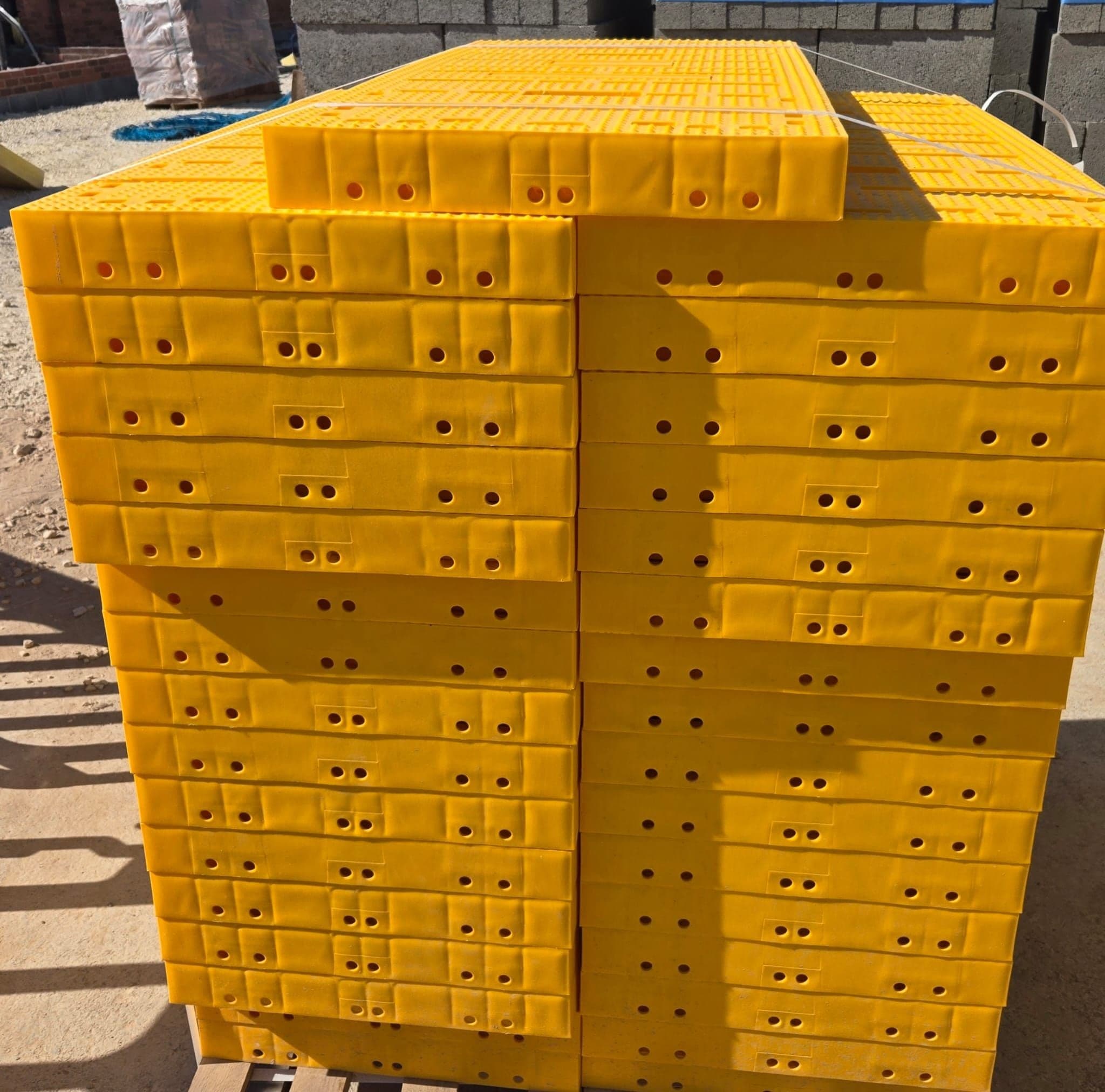
The number that matters on a safety deck spec is the safe working load — for Trad Deck, 2.0 kN/m² uniformly distributed, inclusive of operatives on the deck. It is rated to Load Class 3 under BS EN 12811-1:2003 with Class B material fragility under ACR[M]001:2014, and any impact from above 500 mm triggers a fresh inspection before the platform goes back into service.
Why this article exists
A safety deck spec sheet is a wall of acronyms — SWL, UDL, Load Class, ACR[M]001:2014 — and most of the people who end up reading it on a CDM file are not the surveyor who installed the system. This article is the one-document explainer for principal designers, H&S managers, CDM coordinators and site managers who want to understand what each of those numbers actually means and where it comes from.
Everything in this article is drawn from the TRAD Safety Deck user guide, the Decking Loadings Chart and the TRAD Do's & Don'ts poster. The figures are the figures the manufacturer publishes for the system, not anything we have invented in marketing.
SWL vs ultimate load — and why the SWL is the one that matters
The ultimate load is the load at which a structural element fails. The safe working load (SWL) is the load you are allowed to apply to it on site, with a safety factor built in. Those are not the same number — and the SWL is always lower, because the safety factor exists to absorb everything you cannot predict in advance: a panel that has been on site longer than expected, a slightly off-axis impact, a small dynamic load on top of the static one.
For Trad Deck, the SWL is 2.0 kN/m² uniformly distributed, established with a safety factor of 3 for small dynamic loads. That means the system will hold considerably more than 2.0 kN/m² in a controlled lab test — but on your site, the figure you are allowed to plan around is 2.0, because the safety factor is doing the work that the unpredictability of a real construction environment makes necessary.
If a spec sheet anywhere quotes you an "ultimate load" without an SWL, the question to ask is: what is the safe working load with the manufacturer's safety factor applied? That is the number that matters for your CDM file, and it is the number we will write on your Handover Certificate.
UDL vs point load — and why a UDL works for a working platform
A uniformly distributed load (UDL) is a load spread evenly across the surface area, expressed in force per unit area — kilonewtons per square metre, or kN/m². A point load is a load concentrated at a single point, expressed as force at that point.
For a working platform, the UDL is the right way to express capacity, because what is happening on the platform is a mix of operatives standing on it, materials being carried across it, and small loads being placed on it. None of those things are point loads in the structural sense; they are distributed across the area of contact. The 2.0 kN/m² figure for Trad Deck is the figure that lets you plan for the actual situation a working platform faces.
The number is also inclusive of operatives. That distinction matters. The 2.0 kN/m² is not "2.0 kN/m² of materials plus the people standing on the deck" — it is "2.0 kN/m² total, with the people counted in". A typical operative kitted out for a day on site weighs in the order of 90 to 100 kg, which translates into a meaningful chunk of any small bay's allowance. Plan accordingly.
Load Class 3 under BS EN 12811-1:2003 — what the standard is
BS EN 12811-1:2003 — Temporary works equipment, Part 1: Scaffolds — Performance requirements and general design is the European standard that sets the load classes working platforms are tested and certified against. There are six load classes in the standard, ranging from light-duty inspection platforms at the low end to heavy-duty material storage platforms at the high end.
Trad Deck is rated to Load Class 3, which is the relevant class for a lightweight working access and safety / fall-prevention platform — exactly what Trad Deck is. Load Class 3 is the standard's category for a working platform intended for general construction work where the deck is walked on, used as access, and used as a fall-prevention surface, but is not being used as a primary material storage area.
If a principal designer asks you what load class your deck is, Load Class 3 to BS EN 12811-1:2003 is the answer for a Trad Deck install. It is the class the TRAD user guide assigns to the system explicitly, and it is the class the Handover Certificate will reference.
The 500 mm impact rule — and why it triggers a fresh inspection
The TRAD user guide is explicit on a specific dynamic-loading point that is easy to miss and very easy to break: any impact onto the deck from a height greater than 500 mm constitutes a dynamic event that can weaken the panels, and must trigger a fresh inspection before the platform goes back into service.
The rule is not a piece of paranoia. The 2.0 kN/m² SWL is established with a safety factor for small dynamic loads — small impacts from the kind of routine activity a working platform faces. A larger impact — a tool dropped from waist height, a short length of timber falling from the lift above, a section of duct kicked off a trestle — falls outside the small-dynamic envelope the safety factor was calculated for. That is the reason the rule exists.
In practice, the 500 mm rule means three things on a Graceland install. Site induction explicitly briefs the trades above the deck on the rule. Any reported impact from above 500 mm — or any impact the crew lead is unsure about — triggers a fresh inspection before the deck is back in service. And the Handover Certificate is re-issued after that inspection, so the CDM file always reflects the current state of the platform.
Class B material fragility under ACR[M]001:2014 — what the test is
ACR[M]001:2014 — Test for Non-fragility of Large Element Roofing Assemblies is the UK industry test method for classifying the non-fragility of roofing and platform assemblies. The test runs a defined dynamic impact onto the assembly and grades the result by how the assembly behaves under and after the impact.
The classifications run from Class A (highest non-fragility) down. Trad Deck's panels are classified as Class B under this test method. Class B is the classification the TRAD user guide assigns to the system, and it is the figure your principal designer will want to reference when they are building the CDM file for any job where material fragility comes up — particularly on care-home, commercial and apartment work where the deck is in place for extended periods and the inspection regime needs to reflect the published fragility class.
Class B is not a marketing line. It is a specific, test-based statement about how the platform behaves under dynamic load, and it is the right answer when the question on the file is what is the published material fragility classification of the deck.
What goes in your CDM file
For a Trad Deck install, the loadings section of your CDM file should contain, at minimum: the system name, the published SWL (2.0 kN/m² UDL inclusive of operatives), the load class (Load Class 3 to BS EN 12811-1:2003), the material fragility classification (Class B to ACR[M]001:2014), the inspection regime (daily visual + documented weekly under the Work at Height Regulations 2005), the impact-driven re-inspection rule (any impact from above 500 mm triggers a fresh inspection), and a copy of the jointly countersigned Handover Certificate.
Every one of those items is in the supporting documentation your installer should be handing you on the day. If they are not, ask. If your installer cannot tell you which load class their system is rated to, they probably should not be on the platform either.
A real example
On a recent care-home block install we were called back to inspect after a length of plasterboard fell off a board carrier on the floor above. The drop was just under a metre — well over the 500 mm rule. The site manager flagged it immediately, the deck was taken out of service, our crew lead drove out the same afternoon, every panel in the affected bay was visually inspected on both faces, two panels with hairline impact marks were quarantined and replaced, the inspection record was signed, and a fresh Handover Certificate was issued before the deck was back in service the next morning.
That whole sequence — flag, inspect, quarantine, replace, re-issue — is exactly what the published loadings and the 500 mm rule are designed to make routine. None of it is special; it is just what a properly run inspection regime looks like.
Further reading
Every number on this page ends up on your Handover Certificate
Every article here is written by the crew that surveys, installs and dismantles the deck — not a marketing desk.
If you want this applied to a real site rather than read in the abstract, a phone call to Paul or Ewan is faster than any form.
Keep reading
Safety Decking Vs Crash Decking
Safety decking vs crash deckingTrad Deck Vs G Deck
Trad deck vs g deckAccreditations and standards
FASET audited for platform decking installation and SMAS Worksafe SSIP approved, both renewed for 2026–27. Our certificates, what they cover and how to check them.
About / AccreditationsSafety deck installation
A two- or three-person crew, one visit, a jointly countersigned Handover Certificate. How Graceland installs Trad Deck and G-Deck on housebuilding, care-home and commercial sites across the UK.
Services / InstallTrad Deck installation
Trad Deck fall-prevention platform quoted and installed by Graceland. Load Class 3 to BS EN 12811-1:2003. SWL 2.0kN/m² UDL. Class B material fragility.
Systems / Trad deck